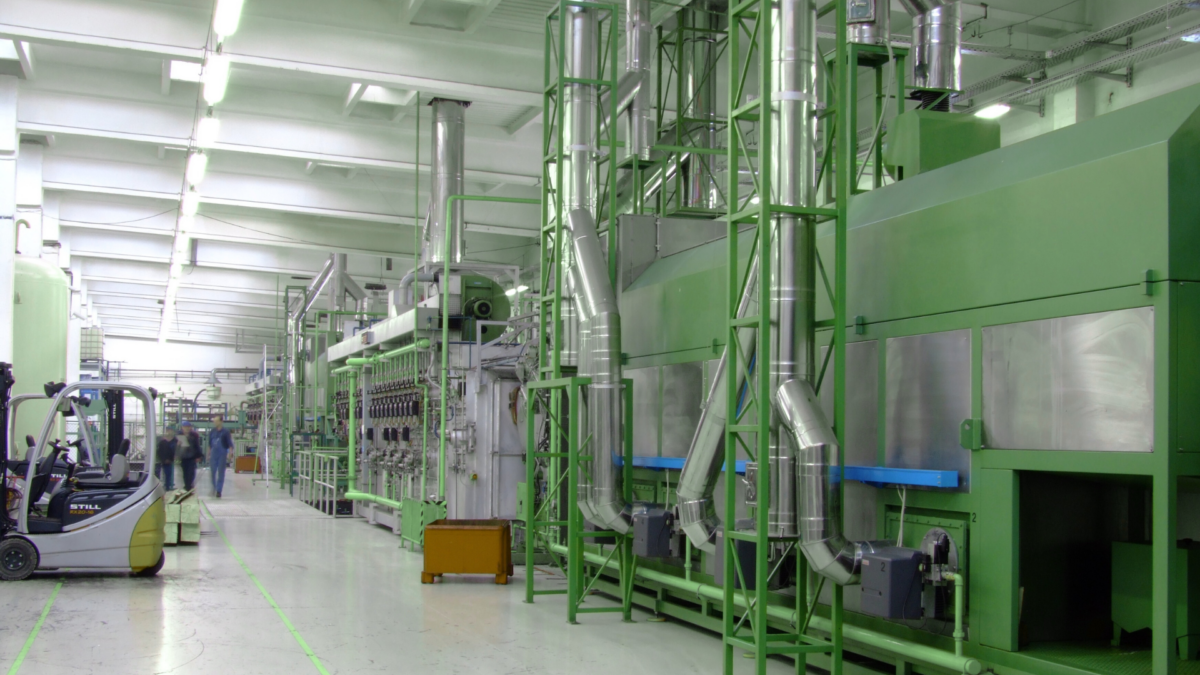
Mastering Lean: How to Apply Principles, Solve Problems & Drive Continuous Improvement in Any Business
 getleanlearn
Spis treści
The rapidly changing business world has led to the challenge of battling inefficient processes, hidden wastes and bottlenecks in the workflow. These challenges have a significant impact on the productivity and growth of your organization.
Many organizations around the globe are facing these issues with endless meetings and infinite efforts to solve these issues. But, not anymore because a proven system is now the talk of the town that will help you to work efficiently, and that is Lean Methodology.
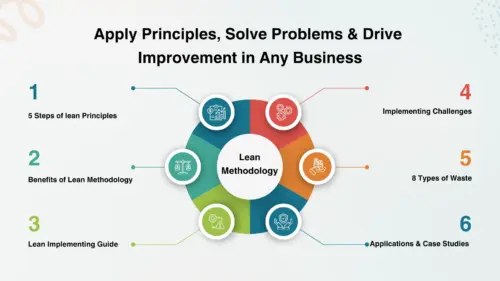
The beauty of Lean methodology lies in its universality and simplicity. Originated from the Toyota factory floor, lean has now reached to the industries across the world. From manufacturing to tech, education and healthcare by focusing on what truly matters for the customers. Delivering maximum value to the customer with minimal waste. In this guide, you will learn exactly what lean is how it work and why it’s one of the most powerful and practice approach to improve processes.
What is Lean Methodology? Foundations for Efficiency
Core Philosophy
Lean is a systematic approach for the identification and elimination of waste through continuous improvement. At its core, Lean is about maximizing customer value while minimizing and eliminating waste. It is basically a mindset not just tools.
Ultimate Goal
The ultimate goal of lean is to deliver value to customers and educate them to drive efficiency with fewer resources.
Why lean matters Today
In today’s rapidly changing and competitive world, businesses are under constant pressure to deliver high quality products and services at minimum cost and quicker response times. Lean ensures higher quality, increased efficiency, reduced costs and waste. At the heart of lean mindset are five principles that shape the idea of how organizations can improve their processes, eliminate waste and drive growth.
Historical Roots: The Toyota Production System (TPS)
The roots of lean go back to the Toyota Production System (TPS) was developed by Taiichi Ohno in the 20th century. At its core, the main focus of TPS was to eliminate wastes that did not create any value for the customers. This systematic approach was simple yet a revolutionary step for value maximization in limited resources.
They introduced the core concepts in TPS such as Jidoka and Just-in-Time (JIT) production setting a global benchmark for operational excellence.
These ideas and core concepts have completely evolved into the lean movement we all know today that has popularized globally. The popularization of the lean movement through book The Toyota Way by Jeffery Liker.
The Lean Mindset: A Culture of Continuous Improvement
Lean is not just about fixing processes but also about transforming the whole culture. Lean is a philosophy that shapes how people think, collaborate and act. The implementation of lean encourages teams to identify problems and lead changes themselves. In addition, the best lean organizations never stop improving but they embrace mistakes and constantly refine their entire system.
At its core lean turns employees into a problem solver fostering a culture of continuous improvement.
5 Steps of Lean Methodology
1. Define Value (customer’s perspective)
Any story of a successful business begins with a simple yet powerful question “what do our customers truly values”. In lean thinking this is not just an option but the first and most important principle understanding value from the perspective of the customer. Value is what the customers are willing to pay whether it’s the fair price compared to the competitors or features that solve their problems, or fast delivery.
2. Value Stream Mapping
The value stream mapping is basically a visual diagram that presents the entire journey of raw material, activities and information required to deliver the desired products and services. The main purpose of this principle is to highlight the value-added activities and identify bottlenecks and eliminate the waste that will lead to smart and effective practices.
3. Efficient Work Flow
The goal of this principle is to move products or services, information, and other material through the value stream without any interruption or delays. Ensuring a smooth flow of activities is important because it identifies the problems faster, reduces lead times and inventory. The continuous flow will reduce inefficiencies and enhance overall productivity.
4. Pull System
This principle is concerned with producing only what and when is needed by the customer. Establishing a pull-based system limits the inventory and work in process items while ensuring a smooth flow of work. The pull-based system allows just-in-time delivery along with production of products according to the customer’s needs.
5. Improvement
Lean is not just a one-time solution for businesses and managers but a mindset driven by continuous improvement. The goal of lean is not to reach a perfect stage it is to keep striving for higher quality levels and efficiency. The concept of continuous improvement (kaizen) in lean ensures processes are regularly reviewed, waste is properly eliminated, and the whole organization commits to achieving high quality and efficiency levels.
Benefits of Lean Methodology

1. Enhanced Productivity and Efficiency
The elimination of wastes optimizes workflows, ensures resource optimization and leads to faster cycle times. All these practices enhance productivity and efficiency leading to long-term success.
2. Significant Cost Reduction
The lean methodology lowers inventory, optimize space and ensures less rework. The efficient use of resources and materials significantly reduces the cost.
3. Improved Quality and Customer Satisfaction
The effective implementation of lean methodology leads to fewer defects by ensuring smooth flow. The lean methodology also ensures faster delivery meeting customer demand more quickly and delivers what customers actually value.
4. Increased Employee Engagement and Morale
One of the key benefits of lean methodology is its increased focus on employee engagement. It also allows employees to be actively involved in problem-solving. Likewise, smooth workflow and less waste lead to a safe working environment.
5. Greater Agility and Adaptability
Lean methodology ensures greater agility and adaptability as organizations with lean a more adaptable to market shifts. It ensures a culture of a continuous learning environment that embraces adaptation.
Step-by-Step Guide to Implementing Lean Methodology

Secure Leadership Commitment & Build a Vision
For the success of lean leadership commitment and building a vision are very important. Leaders must fully understand and communicate the purpose of lean adoption and the expected outcomes along with the benefits. The three crucial steps for ensuring leadership commitment and building vision are:
Define the Purpose
Clearly explain in detail the inefficiency and problem lean will solve.
Set a Clear Vision
Outline what success will look like after the implementation, such as reduced waste, improved customer satisfaction and higher efficiency.
Leadership Role
Leaders should model lean behaviours, inspire teams and ensure resources are available for implementation.
Educate and Empower Your Team
Lean transformation requires the participation of the whole team. Therefore, it is important for the leaders to educate and empower their team. Help them understand the lean concepts and how they contribute to the idea of continuous improvement.
Businesses can provide their teams with specialized training for specialized foundational lean workshops. As well as encourage employees to share ideas and take ownership and create a safe environment for them to experiment.
Identify a Pilot Project (Start Small)
Before making any large implementation focus on starting with small and manageable projects due to low risks. The pilot testing will allow the businesses to identify issues at the start as well as allow the teams to gain confidence for implementation.
Map Current State & Identify Waste
This step includes mapping the current state and identifying waste for which businesses can use value stream mapping (VSM), Gemba walks and data collection related to cycle times, errors and downtime to guide the decision-making process.
Design the Future State & Implement Improvements
Through the data collected in the last step, and by mapping a design for an efficient future process for improvement.
Brainstorm Solutions
Apply the lean tools such as Kanban, 5S and Poka-Yoka to reduce wastes.
Create a Future State Map
Visualize the ideal workflow for adding value and eliminating waste.
Gradual Implementation
Introduce improvements gradually step-by-step, test the outcomes and make improvements where needed.
Measure, Monitor and Standardize
For sustaining lean, ongoing refinement and measurement are very crucial. Therefore, businesses should focus on regularly tracking progress using key metrics such as quality, productivity and lead time.
In this step, ensure to standardize best practices and document what worked well to maintain consistency. Keep reviewing the process and encourage regular feedback for continuous improvement.
Sustain and Scale
To sustain improvements, embed kaizen into daily operations to ensure that organizations should make regular small changes that will lead to big transformations. The organizations should also focus on replicating successful improvements in other areas.
Lean Implementation Challenges and Risks

1. Resistance to change
The management and employees may show resistance to change as they may find it difficult to alter the current workflow.
Solution: Provide clear direction to the employees. Inform them about the benefits of lean and the importance of their role in this transformation.
2. Lack of Leadership Commitment
Lean is a process of continuous improvements and requires strong leadership commitment for long-terms continuity. Without the commitment of leadership the integration will be ineffective.
Solution Understand that lean is a long-term commitment to ensure continuous improvement and supportive leadership is the key aspect of this integration.
3. Superficial Application (Lean Washing)
One of the common challenges is that organization often adopt and apply tools without understanding the philosophy behind it. The superficial application of tools reduces its effectiveness and usefulness.
Solution Organizations should focus on taking a deep insight into the lean principles by providing sustained training.
4. Failure to Sustain Improvements
To sustain any improvement, it is very important for organizations to ensure regular monitoring. As, the lack of regular monitoring will take the organizations back to old habits.
Solution Ensure Standardization, regular audits and promote a culture of continuous improvements.
5. Inadequate training of employees
The application of lean principles includes the implementation of various tools and techniques. The inadequate knowledge of employees regarding these tools can be a crucial challenge for businesses.
Solution Heavily invest in the training of employees and their skills are importance for enhancing the impact of lean.
6. Measuring the Wrong Things
One of the common challenge organizations may face is increased focus on irrelevant metrics and unnecessary elements.
Solution Ensure the alignment of KPIs with customer demands and value. Also ensures that focus is on things that are aligned with the company strategic objectives.
The 8 Types of Waste (Muda)
Defects
The mistakes or error that results in dissatisfied customers and rework, correction and delays. Example; Dented parts shipped to the customers, sending wrong invoices to customers , software crashing during checkouts, mis-interpreted or mislabeled lab samples, incorrect patient records.
Overproduction
Producing earlier, more or faster than the demand or what customers actually need. Example; With just to be on a safe side mindset printing extra packing, preparing various versions of reports that are not important, building integration that clients never asked for , asking to make unnecessary diagnostic tests
Waiting
Idle time when people and processes are paused because the next step is not ready. Example; Machines are paused while waiting for raw material, customers waiting in long queues, developers waiting for access authorization, developers waiting for access authorization, Patients waiting for test results and appointments for days
Non-Utilized Talent
Waste of human potential and creativity. Example; Ignoring improvement ideas from the operators, highly skilled staff performing basic tasks and operations, senior staff and engineers handling routine support instead of new innovation, medical Staff overloaded with paperwork that impacts patient care.
Transportation
Unnecessary movement of products or information that does not add any value to the customers. Example; Frequently moving material and components between various warehouses, paper files being directed across multiple departments, sending extra-large files back and forth instead of using shared tools and software, and patients being transferred between departments unnecessarily
Inventory
Any product or material that is not being used and is just taking up space. Example; Overstock the raw material in the storage, stockpiles of unused promotional material, various outdated versions of code libraries, unused medical kits and expired medicines
Motion
Unnecessary movement of machinery, goods, equipment and people. This includes bending, stretching, reaching, moving and lifting. Example; Workers stretching for tools due to poor workstation designs, employees making multiple trips to storerooms and printers, navigating complex folders, tools and structure, and Doctors walking long distances between supply rooms and wards.
Excess Processing
Performing more work on a product or service than what is required by the customer. Example; Over inspecting and over-polishing the products without any reason, asking for unnecessary approvals, adding complex features that users don’t want, and conducting unnecessary medical and diagnostic tests.
Think You Know Lean? Let’s Bust the Myths

Key Lean Techniques & Tools For Implementation
Value Stream Mapping (VSM)
To visualize, analyze and improve the entire process flow from input to output. Value stream mapping allows businesses to see where waste actually occurs, i.e. rework, delays and unnecessary steps allowing teams to identify improvement opportunities. Value stream mapping is one of the most powerful tools of lean
Current State vs Future State
The current state reveals your problem while the future state designs your solution.
In the current state you can see how your process is currently working. It captures every step, delay and issue in real time. It helps you to see where bottlenecks, inefficiencies and waste exist such as redundant tasks, long approval chains and waiting times. In future state it shows how a process should work after improvement. It removes unnecessary steps, ensure simplified workflow and faster delivery to the customers.
5S Methodology
A systematic methodology for the organization and standardization of a workplace. It comprises of five key words sort, set in order, shine, standardize, sustain.
The 5s methodology has the ability to reduce wastes in motion, waiting and defects. It also increases profitability, productivity, and safety.
5S Methodology Steps
1. Sort
In the first step is focus on sorting and removal of unnecessary items that is not needed for daily activities. This helps in freeing up space, reduce clutter and make the workplace safer and more efficient. For example, Disposing old files and tools or remove material that are no longer useful.
2. Set in order
One you have sorted out the clutter organize what is left so that all tools and items serve a purpose. The goal is to make things easy to use and return. For Example: Color-coded tools, mark storage areas, label shelves areas so employees can quickly and easily locate what they need.
3. Shine
Regular cleaning is not just beyond tidiness it is also about inspection. The cleaning workers can spot early signs of leak, defects and leaks. This keeps equipment highly reliable and prevents small issues from becoming big issues. For example: Wipe down machines regularly and check for oil leaks or damages during the process.
4. Standardize
Create smooth and consistent procedures for the first three ‘’S’’.
5. Sustain
Maintain the standards and improvement through discipline and reviews
Product Recommendations
| Category | Question | Yes/No | Comments |
| Sort | Unnecessary material, documentation and tools have been removed from the area
Only important items required for current work are kept in each section |
||
| Set in Order | All tools and materials have clearly labelled according to their locations
Frequently used items are place is a logical order and in easily reachable locations |
||
| Shine | Work areas, equipment and floors are free from waste and leaks
Cleaning was used as an opportunity to inspect errors. |
||
| Standardize | Visual standards such as codes, signs and colors are consistently applied
5S audits results and information is displayed for transparency |
||
| Sustain | Regular 5s audits are performed and results are tracked over time
Employees regularly report the issues Management supports 5S through follow up and feedback |
Lean Tools
Kanban
A visual system for managing work as it moves through a process, using cods or visual signals to limit Work- in-Progress (WIP) and pull work through the system only when capacity allows.
Benefits
-
Reduces overproduction
-
Limits inventory
-
Visualizes bottlenecks
-
Improves flow
-
Increases transparency
-
Promotes collaboration
-
Reduces lead time
Principles
Visualize workflow
Map all the workflows and processes on a board with columns. Divide the workflow into columns like To Do, In-progress and done to make work visible and easier to track.
Limit WIP
Set a maximum item per column to prevent overload to maintain focus and ensure focus and consistent high-quality progress.
Manage flow
Move tasks through columns pulling new task only when there is capacity. This principle is effective for keeping the process efficient and balanced.
Kaizen
Purpose
A lean tool that is focused on making small, continuous, incremental improvements to processes, products, or services over time, involving all employees from top management to the frontline
Benefits
- Fosters a culture of continuous learning and problem-solving
-
Leads to significant long-term gains
-
Empowers employees
-
Reduces waste
-
Improves quality
-
Increases efficiency
PDCA Cycle (Plan-Do-Check-Act)
| PDCA Cycle Checklists | |
|
Plan
|
|
|
DO |
|
|
Check |
|
| Act |
|
Poka-Yoke (Error-Proofing)
It refers to designing processes to prevent errors from occurring or to make them immediately obvious. A lean tool that is used to design a process to prevent errors and alert management about their occurrence.
SMED (Single-Minute Exchange of Dies)
A methodology for reducing the time it takes to complete equipment changeovers or process setups from hours to minutes, by converting internal (machine stopped) setup steps to external (machine running) steps.
Benefits
-
Increases production flexibility
-
Reduces batch size
-
Lowers inventory
-
Improves delivery time
-
Boosts capacity
-
Reduces lead time
Real-World Applications & Case Studies
Lean today is a global mindset that is used in public service, healthcare, education, and more. It is no longer just for manufacturing floors. Here’s how Lean is being applied in several industries to make a significant difference.
|
Industry |
Common Lean Challenges | Lean Tools Applied |
Typical Outcomes |
|
Manufacturing |
High inventory, production bottlenecks, quality defects | Value Stream Mapping, 5S, Kanban, SMED, Poka-Yoke | Reduced lead times, lower inventory costs, improved product quality, increased throughput |
|
Healthcare |
Long patient wait times, medical errors, inefficient administrative processes | Value Stream Mapping, 5S (for clinics/operating rooms), Standard Work, Kaizen | Shorter patient waiting times, reduced medication errors, optimized bed turnover, improved staff morale |
|
Software Development (Lean-Agile) |
Feature creep, slow delivery, rework, communication silos | Kanban, Scrum, Continuous Integration/Delivery, Value Stream Mapping (for software delivery pipeline) | Faster time-to-market, higher quality code, increased team collaboration, better response to customer needs |
|
Service Industry |
Redundant processes, long customer service queues, high employee turnover | Value Stream Mapping, Standard Work, Poka-Yoke (for forms), Visual Management | Reduced customer wait times, streamlined back-office operations, improved service quality, increased customer satisfaction |
| Education | Administrative bottlenecks, inefficient resource allocation, curriculum development delays | Value Stream Mapping, 5S (for classrooms/offices), Standard Work, Kaizen | Faster student enrollment processes, optimized resource use, improved learning outcomes, reduced administrative burden |
Lean vs Agile vs Six Sigma
While Lean focuses on cutting waste and adding value, Agile emphasizes flexibility, and Six Sigma aims for precision. Together, they represent three powerful approaches to continuous improvement.
|
Methodology |
Primary Focus | Main Goal |
Typical Application |
| Lean |
|
|
Manufacturing, Services, Software Development, Process Optimization |
| Agile |
|
|
Software Development, Product Management, Marketing, Innovation Teams |
| Six Sigma |
|
|
Manufacturing, Quality Control, Process Improvement, Healthcare |
Each approach shines in its own way Lean builds efficiency, Agile delivers adaptability, and Six Sigma ensures quality precision. Many organizations now combine elements of all three to stay competitive and continuously improve.
Final Thoughts
Lean is a way of thinking, not just a collection of tools. The goal is to continuously find and remove waste in order to provide customers with greater value while using less resources. Lean changes how businesses think and function, increasing productivity, enhancing quality, and cutting expenses.
Keep in mind that Lean’s true strength is its emphasis on progress rather than perfection. Each minor enhancement adds to a broader culture of sustainability and excellence.
The Journey Not the Destination
Lean is a continuous process rather than a one-time effort. Teams begin to lag behind the instant they cease to improve. The Lean philosophy is maintained by ongoing learning, introspection, and adaptation, which keeps businesses flexible and change-ready.
It’s your time now. Start small, pick one process, implement one Lean tool, and observe the impact. Honour each accomplishment, draw lessons from setbacks, and motivate your group to improve daily.
Growth comes easily when Lean is deeply rooted in your culture.
Start today and cut waste, boost flow, and upskill your tea. No fluff, just results.
Got Questions? Find Out Here