

What Are Business Improvement Techniques? Key Methods for Growth
 getleanlearn
Spis treści
Mastering Business Improvement Techniques
An essential guide for enhanced operational excellence
In today’s fast-moving and highly competitive marketplace every business faces the pressure to be different and deliver value to the customers. Yet, the actual challenge is not simply ensuring improvement.
But, is actually about knowing how to achieve efficiently and sustainability through improvement. From lean to six sigma to agile and total quality management countless business improvement frameworks ensures quality and efficiency.
However, leaders often struggle to demonstrate which approach is best aligned with their goals. This detail guide will allow you to cut through the noise. By, offering a strategic, clear roadmap to help you identify and select right business improvement technique for quantifiable impact.
By mastering these techniques businesses can streamline workflows, enhance quality and foster a culture of continuous improvement. Whether you are in an emerging business or a corporate leader this guide will provide you with tools to drive long-term operational excellence.
It’s time for you to unlock your business potential. Transform your everyday operations into extraordinary activities through the light of business improvement techniques.
Business Improvement Techniques: More than Just Buzzwords:
Business improvement strategies help in the identification of business parts that need to be improved and refined. These are structured approach to identify, analyze and executing strategies to enhance various aspects of a business. These improvement techniques are supported by the commitment to optimize efficiency and fostering innovation. The main purpose of these techniques is to achieve specific and measurable in key areas i.e. cost reduction, customer satisfaction and innovation.
The business improvement techniques are different from general business strategies. While, other strategies define what a business aim to achieve. The business improvement techniques define how objectives should be met through operational excellence.
At Its Core Business Improvement Strategies
Data-driven decision making
Using data driven evidence and metrics to guide improvements rather than assumption.
Systematic Process Evaluation
Understanding and evaluating how each business activity contributes to the customer value.
Continuous improvement
Ensuring a culture where all the team members are empowered to refine, question and improve activities.
In simple terms, these business improvement techniques bridge the gap between strategy and execution. These techniques enable you to turn abstract ideas into tangible results.
The Evolution Of Improvement Thought
The evolution of business improvement techniques traces back to early principles of industrial engineering. The principles such as Frederick Taylor’s scientific management that is focused on efficiency through time-motion studies and standardization. After the second world war, pioneers like Deming and Juran shifted the focus toward quality management with emphasizes on customer satisfaction and continuous feedback.
In the late 20th century, the rise of lean and six sigma shifted the focus on data driven quality control and waste reduction. In the current era, the improvement techniques have expanded beyond manufacturing into services and digital domain. These domain such as Kaizen, design thinking and agile promotes innovation, adaptability and a culture of continuous improvement.
Core Principles Underpinning Effective Business Improvement
Customer-Centricity: The ultimate Driver
At the heart of every successful improvement effort lies a deep commitment to understand and deliver value to the customers. Customer centricity means seeing every process and product through the eyes of customers. The main focus is to identify what truly matters to the customer and eliminate what does not. Business that prioritizes this principle are better equipped to align operations with customer expectations. This principle is the ultimate driver for differentiation, high loyalty and long-term success.
Continuous Improvement (Kaizen): A journey Not a Destination
It is derived from the Japanese philosophy Kaizen that is continuous improvement emphasizing small change in significant transformation. This principle explains that rather than treating improvement as one time strategy consider it as continuous journey. An improvement journey where employees look for opportunities to improve their activities. The principle fosters a mindset that nurtures agility and resilience and culture that thrives continuous learning and improvement.
Data-Driven Decision Making: Eliminating Guesswork
The effective improvement demands evidence not just assumption. Data driven decision making replaces perception with insights and figures using analytics, metrics and performance indicators. These insights and indicators enable business to identify root causes and evaluate results objectively. When businesses use accurate data they predict trends, reduce biases and makes more effective decisions supporting their strategic goals.
Process Thinking: Understanding the Flow of Work
This principle ensures that all the business activities are interconnected that can be analyzed, mapped and optimized for effectiveness. The process thinking shifts the focus from individual tasks to the entire flow of value across the teams and departments. By visualizing how inputs transform results businesses can identify inefficiencies and bottlenecks that disrupts performance. The value stream mapping allows leaders to see the big picture and optimize opportunities ensuring every step adds value to the customers.
Waste Reduction: Maximizing Value and Minimizing non-value added
At the core of lean philosophy, waste reduction seeks to eliminate activities that use resources without creating any value. These wastes mainly include defects, overproduction, excess motions and waiting. The continuous identification and removal of waste business can free up spaces and reduce costs. The elimination of waste also improves quality and create smooth workflows that increases competitiveness.
Employee Empowerment and Engagement: The Heart of Improvement
Real transformation not only includes processes but also people. Empowering employees with skills and training encourage them to contribute to the improvements. The high engagement of teams and employees at all levels cultivates creativity and collaboration. The high engagement of employees turns improvement into a shared responsibility not just a direction to follow.
Leadership Commitment: Championing the Change
The role of leadership in the support and resourcing of improvement initiatives is indispensable for effective lean management. The significance and effectiveness of improvement is dependent on the commitment of leaders. As, they provide clear vision and directions for transformation as well as ensure alignment of objectives with business objectives. When leaders support improvements they set a tone for continuous growth across the organization.
The Tangible Benefits of Implementing BITs
Boosting Operational Efficiency and Productivity
Business improvement techniques streamline how each activity should be carried out. It minimizes redundancies, reduces delays and improve the flow of information and materials. Through process optimization and systematic analysis businesses can shorten their cycle time and ensure effective resource utilization. By adopting lean principles such as standard work and value stream mapping business can gain clear visibility into processes .
Case Study Insight: A leading logistic company improves its delivery performance by applying lean principles and methodologies to its warehouse operations. By eliminating waste (unnecessary steps, routes optimization) and introduction pull-based system the company achieved a faster turnaround time and reduced errors.
Achieving Significant Cost Reductions
Cost reduction is one of the most direct and measurable result of business improvement techniques. Businesses can free up both capital and time by reducing rework, streamlining inventory management and eliminating wastes. Improvement tools such as six sigma DMAIC framework help identify the root cause and establish a data driven solution. To ensure operational gain and financial stability it is good for the business to set key performance indicators before initiating any project.
Elevating Quality and Customer Satisfaction
Quality and customer experience is the center of every improvement initiative. Business can apply improvement techniques to enhance the quality by introducing Poka-Yoka methods and using data to minimize differences. The products and services that consistently meet or exceed customer expectations leads to improved loyalty and satisfaction.
Gaining a competitive edge
In the rapidly changing markets, efficiency and agility has become a crucial factor in gaining competitive advantages. Businesses that integrate business improvement techniques are better positioned in the market. These businesses adapt quickly to shifting trends, customer demands and technological advancements. By reduction in lead times, improve consistency and aligning operations with strategic objectives. These organizations can deliver high value outperforming the competitors.
Enhancing Employee Morale and Engagement
Engaging and empowering employees reduces frustration from inefficient processes. It also fosters a sense of ownership in employees for positive changes. When employees get feedback on their work it directly shapes their motivation, improvements and collaboration.
Building Organizational Agility and Resilience
Today’s highly uncertain business environment resilience is a strategic need. Business improvement technique help business become more responsive, adaptive and innovative by introducing a culture of feedback. These BITs create a responsive culture that embraces change and ensure continuous learning.
In-Depth Look at Popular Business Improvement Methodologies
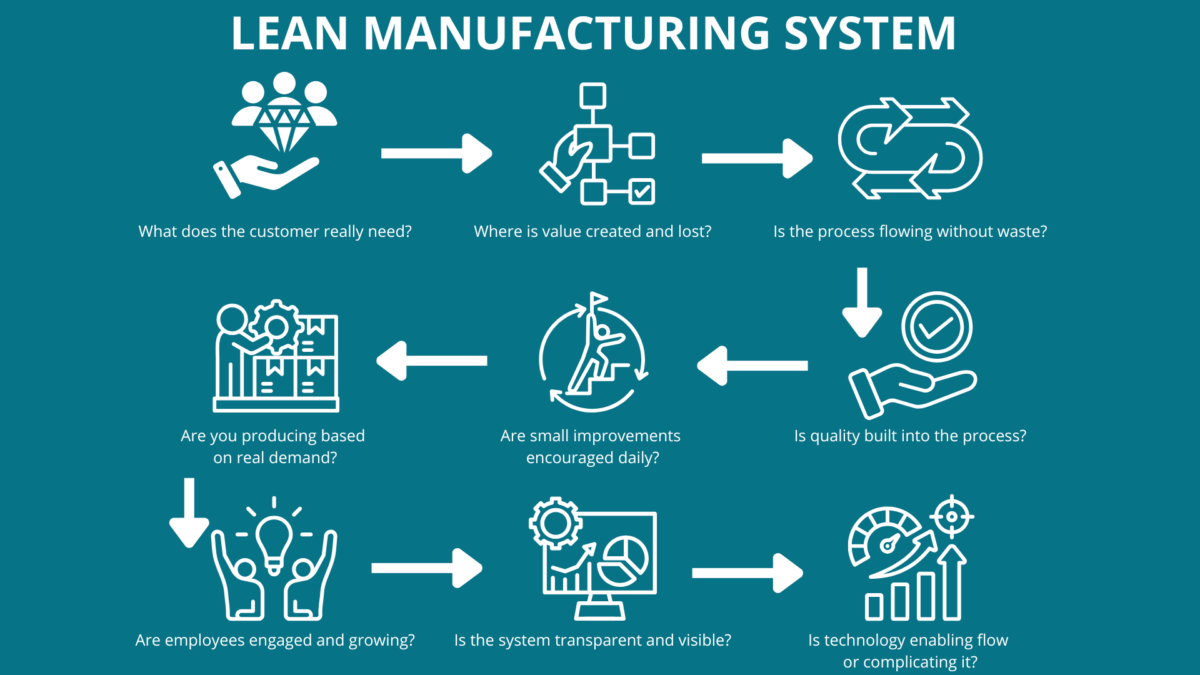
Lean Methodology: The Art of Waste Elimination
| Core Concept | At its core lean is all about waste elimination and maximizing value for customers. It focuses on the elimination of all 8 types of wastes (Muda) and non-value-added activities. The goal of lean methodology is simple yet powerful delivering high value in limited resources |
| Key Principle | Define Value- Understanding value from the perspective of the customer. Value is what the customers are willing to pay.
Map value stream- Mapping how the work flows across the business from raw material to customer delivery. Create Flow- Ensuring uninterrupted and continuous movements of value Establish Pull System-Producing only products that are needed and only when it is needed. Pursue Perfection- Striving for continuous improvement and zero waste. |
| Key tools | 5S ( sort, set in order, shine, standardize, sustain), Value stream mapping, just in time inventory and kanban. |
| Ideal Applications | Lean methodology thrives across the industries (Manufacturing, logistics, healthcare and administrative) where consistency and efficiency are critical. It is effective for businesses that aims to enhance its speed, reduce lead time and deliver value. |
| Potential Challenges | Despite the effectiveness, lean demands a cultural transformation. Long-term success of lean demands leadership commitment and employee engagement. Initial investments in training and development program can enable businesses to deal with these challenges. |
Case Study
A medium printing company applied second principle of lean value stream mapping to its production process. With the identification and elimination of bottlenecks in the design and scheduling process. The company was able to reduce its order preparation time by 25% significantly enhancing its customer satisfaction and on-time delivery service.
Six Sigma: Driving Towards Near-Perfection
As quoted by a certified Six Sigma Black Belt “I’ve witnessed how rigorous data analysis transforms business outcomes. Six Sigma isn’t just about fixing problems it’s about understanding them deeply, preventing recurrence, and driving measurable quality improvements across every function.”
| Core Concepts | The six sigma is a data driven methodology that is focus on achieving quality by reducing variation and elimination of defects.
Six sigma combines statistical rigor with structured problem-solving to enhance performance consistency. |
| Key Principles | Six Sigma foundation is dependent four key principles
Customer focus: Setting quality standards based on the customer expectation Data-driven Decision Making: Using data and facts to solve problems and make decisions Proactive problem solving: Preventing errors and defects in advance before they occur. Process Orientation: Understanding the whole end-to-end system not just the parts individually. |
| Key Tools | DMAIC is a structured framework that provides roadmap for continuous improvement with various supporting tools such as:
Root cause analysis- 5S, Fishbone diagram Measurement system analysis Statistical process control All these tools ensures that improvements are not just implemented but statistically validated for high effectiveness. |
| Ideal Application | Six sigma is an ideal methodology for complex processes with defects and errors where consistency and accuracy are crucial. This mainly includes healthcare, finance, manufacturing, transactional operations. |
| Potential Challenges | Six sigma despite being effective is also very resource intensive. It demands strong statistical expertise and a long-term commitment. Thus, businesses without strong data infrastructure may face significant challenges. |
Total Quality Management (TQM): A Holistic Quality Culture
| Core Concept | Total quality management (TQM) is a comprehensive management technique that prioritises long-term success through customer satisfaction. Unlike methods that target isolated processes TQM integrates quality into the DNA of the organization as a whole. It engages employees on all levels from front-line staff to executives with aim of continuous improvement in products, processes and services. The ultimate goal of this philosophy is to create a culture where quality is a shared responsibility. |
| Key Principles | Customer focus: Every business process centers around meeting the customer needs and expectations.
Continuous Improvement: Quality enhancement is a continuous process not just a one-time project. Employee involvement: Empowering employees to identify and solve issues with creativity, ownership and innovation. Process-Centered Approach: Efficiency usually comes from well-managed processes there the TQM main focus is to form effective processes. Integrated System: Improvement comes from an integrated system. All departments collaborate to achieve common goals to ensure high quality. Strategic and Systematic Thinking: Quality improvement and management should be aligned with the organization’s mission and objectives. |
| Key Tools | Benchmarking, Supplier Quality management, cost of quality analysis and quality circle. |
| Ideal Application | TQM is effective for business seeking a unified and company-wide culture of excellence such as education, healthcare, manufacturing and service industry. TQM is best for businesses who aims to increase customer loyalty and operational excellence. |
| Potential Challenges | Despite the proven effectiveness TQM is usually perceived as abstract if not supported by its related tools.
The implementation of TQM demands strong leadership with sustained efforts lack of commitment and efforts can reduce its effectiveness. |
Business Process Reengineering (BPR): Radical Transformation
| Core Concept | Business process reengineering (BPR) as an improvement technique is a very disruptive approach. It includes radical redesigning and integrates fundamental rethinking of business processes to achieve dramatic improvement. The main focus area for improvements are quality, cost, service and speed. Instead of small adjustments BPR starts from a clean slate improving and transforming every process. |
| Key Principles | Clean slate thinking: Re-imagine how each business process should be operated in an ideal scenario.
Cross-Functional Collaboration: Ensure that all teams are part of the improvement and redesigning processes. All diverse teams collaborate with each other. Leveraging Technology: Utilize information technology system to automate, accelerate and integrate new work flows. Focus on core processes: identify processes with high impact that directly influences performance results |
| Key Tools | Process mapping, organizational structure redesign, change management and IT system integration. |
| Ideal Application | BPR is effective for businesses facing technological shifts, strong market disruption, and performance inaction. It is mostly effective in sectors such as banking, telecom, government and supply chain. It is highly beneficial in sectors where rapid transformation is required for competitiveness. |
| Potential Challenges | The BPR as an improvement technique carries various risks due to its radical nature. These risks mainly include high cost of implementation, employee resistance and job displacement. |
Kaizen: The Power of Small Steps
| Core Concept | A Japanese concept that represents the philosophy of making continuous and small improvement across the organization. It focuses on long term and sustained success that is achieved through incremental progress. |
| Key Principles | Kaizen is rooted in ongoing small changes, employee engagement and focus on eliminating waste. The key principles for Kaizen are standard work (maintaining consistency through the defined processes) and Gemba (going to where the work actually happens). |
| Key Tools | 5S improvement techniques, kanban boards, kaizen events, improvement workshop. All these tools and practices are designed to promote clarity and accountability within the daily operations. |
| Ideal Application | Kaizen is best technique for businesses that aims to build a sustainable culture of operational excellence. It works specifically in sectors such as logistics, manufacturing and service that prioritize collaboration and improvement. |
| Potential Challenges | Kaizen incremental nature ensures stability and consistency. But, it can be very slow in large scale transformation projects. Without leadership commitment and motivation, the process may lose focus in broader strategic objective. |
Agile Methodology: Flexibility and Rapid Iteration
| Core Concept | The agile methodology transforms traditional project management by embracing rapid adaptability and collaboration. Instead of rigid planning, agile methodology empowers employees to respond to changes and deliver value. |
| Key Principles | Agile emphasises individuals and collaboration over processes and tools. Frameworks such as kanban and agile sprints enable teams to break large projects into small and manageable changes. |
| Key Tools | Kanban boards, user stores and Scrum (daily stand-ups, product backlog and sprints) |
| Ideal Application | This method is ideal for creative and technology-driven industries. Agile supports industry that faces continuous market shifts and demand flexibility. It is ideal for application in marketing, product development, research and software development. |
| Potential Challenges | The success of agile is dependent on its strong communication and team maturity. But, without leadership commitment and support teams may experience repetition of tasks or misalignment between strategic goals and frequent changes. |
Theory of Constraints (TOC): Focusing on the bottleneck
| Core Concept | The theory of constraints is a powerful improvement technique that is focused on the identification and eliminating the limiting factors. It eliminates the constraints that prevents businesses from achieving its goals. |
| Key Principles | TOC follows a systematic process of five steps.
Identify the issue and constraint Exploit it to maximize capacity Subordinate other processes to support it Elevate the constraints through targeted improvements Repeat to maintain the ongoing flow optimization |
| Key Tools | Critical chain project management, five focusing steps, and throughput accounting. |
| Ideal Application | TOC is highly effective in logistics, manufacturing and project-based environments where the results are restricted by a single process. This closely align with lean and six sigma methodology enhancing system performance. |
| Potential Challenges | TOC offers a very strong focus due to which it may oversimplify complex system by emphasizing one constraint at a time. The implementation of TOC requires deep analytical insight and follow-up to sustain improvements. This may become challenge for some businesses. |
How to Select the Right BIT for Your Business
Understanding your unique context: Beyond the Buzzword
The process of choosing the right business improvement techniques can sometimes feel overwhelming. With so many methodologies and frameworks i.e. Agile, TQM, Kaizen, Six sigma and lean. It is easy to get lost in the world of these buzzwords and use a different business improvement technique. The key of selecting effective BIT lies in understanding your business’s unique context and align your chosen with your strategic goals.
Identify your core problem
What specific problem are you trying to solve. Such as slow delivery, low customer satisfaction, high defect rate, and project delays. The improvement strategy must directly address the root cause.
Industry and Regulatory Environment
How do industry rules and regulation needs influence the stability of certain techniques? For example, agile and lean are aligned with the industry trends of tech and marketing. While, industries such as finance and healthcare have strict quality standards that are better aligned with TQM and Six sigma.
Organizational Culture
Is your company culture open to radical changes(BPR) or more inclined towards incremental improvements(Kaizen)? Is it collaborative or hierarchical?
Available Resources
Assess your current budget, resources and time commitment as well as the availability of skilled workforce. Be realistic about your workforce skills and and organization capacity to lead the transformation.
Matching BITs to Specific Goals and Problem Types
For quality and defect reduction: Total quality management (TQM), Six Sigma
For efficiency & waste elimination: Lean, Kaizen
For speed & flexibility in development: Agile, Lean
For system bottlenecks & Throughput: Theory of Constraints
For Radical, Top-down transformation: Business process reengineering
Interactive Assessment: Which BIT is right for you?
-
- Which specific issue you want to solve?
- How risk-tolerant is your business?
- Do your resources have the capacity to support your improvement plan?
- Is your workforce ready for the incremental changes?
- What level of process expertise do you have?
A Step-by-Step Guide to Implementing Business Improvement Initiatives
Phase 1: Define the problem and your goals
Clearly define your problem what issue you intend to solve. Also define your project scope and desired outcomes by using SMART objectives techniques. The use of smart goals will ensure accountability and clarity.
You can also use project management software i.e. Asana and Monday.com that will be effective for your initial project planning.
Phase 2: Analyse and measure the current state
Collect all the baseline data to quantify the current problems and map the existing process. Clearly document all the current and improved processes to ensure consistency and facilitate the employees’ trainings accordingly.
You can use process mapping and visualization tools such as Microsoft visio, Miro, and lucid-chart. This will allow you to analyse the current state of the processes.
Phase 3: Identify and Analyze the Root Causes
Utilize tools like Fish-bone diagram, 5 Whys and statistical analysis to investigate the root causes and pinpoint the fundamental causes of the identified problem. Address the root cause but, not just the symptoms. Go deep into the issue rather than just fixing the evident reasons of the issue.
Phase 4: Improve the design and implement the solution
Identify and streamline all the potential solutions for the identified problem. After analysing the pros and cons of all the potential solutions select the most effective solution. After selecting the effective solution, conduct pilot testing evaluate the results with the desired outcome.
After pilot testing implement the chosen changes and solution on a broader well. “Start small and think big” begin with pilot projects to test the identified technique and build a strong momentum scaling up the implementation of effective solution across the organization.
You can also use various change management frameworks and tools such as Kotter’s 8 step process or ADKAR model to guide your business throughout the transformation.
Phase 5: Control, Sustain and Standardize
Monitor the performance of the new processes across the organization. Sustain and standardize all the changes with clear procedure. Establish a strong control mechanism to prevent errors and regression.
Measuring Success and Sustaining Improvements
Establish Meaningful Key Performance Indicators (KPIs)
Define all the relevant metrics that are highly aligned and linked to your strategic improvement goals. The main metrics includes cycle time, cost savings, employee turnover, defect rate.
Monitoring and Reporting Performance
Conduct and implement regular review and monitoring cycles. Creating performance dashboards and establish a transparent reporting system. The transparent reporting and monitoring system to track the progress and identify the shortcomings.
Implementing Control Mechanisms and Standardization
Develop and implement a strong control mechanism and standardization. Develop an effective standard operating procedure providing training for the team. Conduct regular audits and use visual management tools to ensure acceptance to the new processes.
Fostering a culture of continuous Improvement
Encourage a mindset in the organization where everyone looks for opportunities of modification beyond the designed formal projects. Foster a culture of continuous improvement where everyone wants to learn and make small improvements.
You can use Gemba walk and KaiNexus that is a continuous improvement software to facilitate and track the selected improvement ideas.
Commitment to Regular Content Review and Updates
The above guide is regularly reviewed and updated regularly according to the latest trends and advancements. The main purpose is to ensure relevance and accuracy of the processes.
Overcoming Common Challenges in BIT Implementation
Resistance to change is a common challenge in the journey of transformation. Use transparent communication and include all employees from very early stages providing them with adequate training.
Lack of resources, budget and time is a crucial challenge for which its is important for the leadership to ensure effective use of resources.
Poor communication can be a barrier in effectiveness of the selected plan for which establish a strong communication channel and conduct regular cross-functional meetings.
Insufficient skill gap can lead to various errors and defects, highlighting the need for lean manufacturing training. For which, invest in targeted training programs and leverage continuous learning.
Losing focus is common challenges as employees can easily loose focus in the process of transformation. To overcome this challenge clearly define the scope and establish a change control process for regular review and relevance.
Conclusion: Your Path to Continuous Business Excellence
Business improvement is not a one-time project but a continuous journey learning, adapting and transformation. By implementing the popular business improvement methodologies, you can create lasting value for both business and customers. Business improvement techniques are not just about fixing problems. But about building a continuously improving and resilient business that is capable of thriving in different market trends and conditions.
Small improvements lead to big transformations so take the first step towards your transformation. Use the guide “Which BIT is right for you” as your starting point. Take small step towards your transformation journey go through each phase. With the effective use of the guide watch how continuous commitment towards progress turns your ordinary operation into long-lasting excellence.